A historic partnership between Morehouse School of Medicine and CommonSpirit Health, More in Common Alliance is aimed at addressing the underlying causes of health inequities, including the lack of representation among care providers.
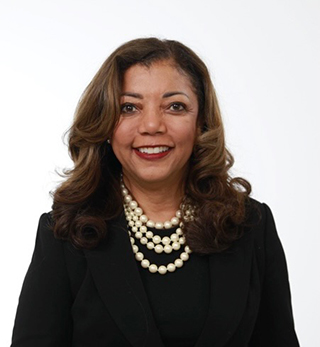
Stakeholder Spotlight: Dr. Gloria Richard-Davis
MD – LSU College of Medicine New Orleans, 1982
Obstetrics and Gynecology Residency – Madigan Army Medical Center, Tacoma, WA, 1982 – 86
REI Fellowship – Wayne State University, Hutzel Hospital, Detroit, MI, 1992 – 1994
MBA – University of Arkansas, Little Rock, AR, 2015 – 2017
Dr. Gloria Richard-Davis, MD, MBA, NCMP, FACOG is a nationally recognized expert in women’s health, reproductive endocrinology, and health equity, with more than 30 years of clinical, academic, and leadership experience. She serves as Regional Dean for Morehouse School of Medicine in Seattle, where she is leading the development of a regional medical campus in collaboration with Virginia Mason Franciscan Health and the University of Washington.
Dr. Richard-Davis is double board-certified in Obstetrics & Gynecology and Reproductive Endocrinology and Infertility and a certified practitioner with The Menopause Society. She previously served as Executive Director for Diversity, Equity, and Inclusion at UAMS and has led national DEI efforts through the American Society for Reproductive Medicine (ASRM), where she currently chairs the DEI Working Committee. She is the recipient of ASRM’s Gold Humanitarian Award and the 2023 Just Communities of Arkansas Humanitarian of the Year Award.
A published author, media expert, and NIH-funded researcher, her work has focused on eliminating health disparities, expanding workforce diversity, and improving reproductive outcomes for women of color. You can hear from Dr. Richard-Davis in her own words in this video.
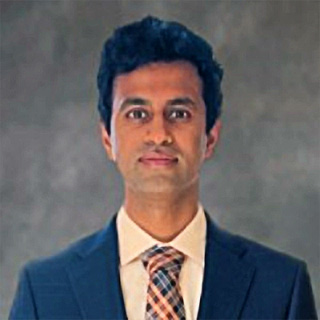
Residentially Speaking: Meet Bakersfield resident Manoj Narava, MD
What is your medical school, and why did you choose medicine?
Dr. Narava: I graduated from the University College Dublin School of Medicine in Ireland. I chose medicine after a high school biology teacher and my uncle sparked my interest in learning about the human body and the privilege of caring for people during vulnerable moments in their lives. I was also drawn to a profession where people come to work each day with the shared goal of helping others.
Has residency been what you expected?
Dr. Narava: Residency has been both what I expected and something that is difficult to fully anticipate. Medical school provided a good foundation for understanding disease and developing treatment plans, but residency has shown me what it means to take a more active role in clinical decision-making. Even with the guidance of attending physicians, making decisions that directly and sometimes immediately affect patients carries a real sense of responsibility. Learning to approach those decisions in a thoughtful and conscientious way has been challenging at times, but it has also been one of the most meaningful parts of training.
What are some things you experienced that you didn’t expect?
Dr. Narava: Most of my medical school training was in university hospitals, so training in a community hospital has been a different experience than I expected. I have become more aware of the care gaps that exist in our region. Some subspecialty services are limited locally, so patients are often transferred to hospitals in Los Angeles and then return here as step-down cases or for follow-up care.
It has been eye-opening to see more advanced stages of disease and to care for patients who may not have had consistent access to healthcare. Training in the Central Valley has given me a better understanding of health inequities.
What has been your biggest challenge?
Dr. Narava: One of my challenges has been adjusting to the growing responsibilities of residency while maintaining personal well-being and preparing for the next steps in my training. As responsibilities increase, so does the amount of information that must be processed to make sound decisions. With so many medical resources available today, especially with AI, learning to identify what is reliable and clinically relevant has been an important skill to develop.
What are some of your goals for your first year of residency?
Dr. Narava: My goals for this year include becoming more efficient and confident in patient care and continuing to grow as a resident physician. On a personal level, I hope to maintain a healthy balance by making time for family and friends while also improving my physical well-being, including staying active and avoiding the “intern 15.”
Without violating HIPAA, do you have a success story to share?
Dr. Narava: One of our ICU attending physicians says that medicine can be confrontational at times, and I understood what he meant when I had the chance to intubate a patient during a cardiac arrest. Intubating while chest compressions were ongoing was intense. In that moment, I remember focusing on the advice he had given me previously – not to tilt my wrist with the GlideScope, but instead to lift diagonally toward the corner where the wall meets the ceiling, and to keep the vocal cords in view so everyone in the room could see. With his guidance, I was able to successfully intubate the patient.
Afterward, he gave me tips to improve my technique such as holding the tube closer to the connector for better control and avoiding lingering at the vocal cords too long. Moments like that remind me how the voices of attendings stay with you during difficult situations and help you improve with each experience.
What do you enjoy doing in Bakersfield during your off time?
Dr. Narava: I like to stay active by running at a couple of parks near my house or shooting hoops, and I enjoy unwinding with my co-residents. I have also found a few places nearby to play billiards. When I have more time off, Sequoia National Park is a short drive from Bakersfield and is a nice change of pace.
People on the Move: Meet New Philanthropy Director Zack Suggs
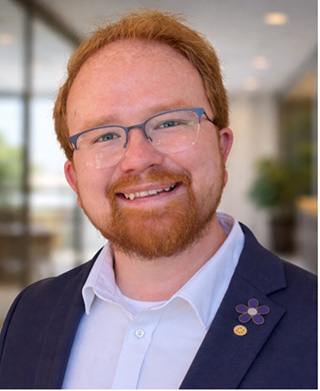
Zack Suggs has joined CommonSpirit Health as System Director, Philanthropy, supporting the More in Common Alliance (MiCA) across California. A mission-driven philanthropy leader with deep experience advancing organizations focused on critical health issues, Zack will lead fundraising efforts for MiCA sites in Bakersfield and Santa Cruz, while also partnering with foundation teams that support MiCA and other graduate medical education programs across the system.
Zack brings a strong track record of building high-performing fundraising initiatives and cultivating transformational donor relationships. Most recently, he served as Senior Director, Walk to End Alzheimer’s for the Northern California and Northern Nevada chapter of the Alzheimer's Association. In that role, he led the largest Walk in the country—Silicon Valley—and oversaw a $2 million peer-to-peer fundraising campaign. He also supported nationally recognized initiatives, including Part the Cloud, A Bright Night, and Inspire Napa Valley, and stewarded cross-functional donor engagement efforts that generated multi-million-dollar impact. Additionally, Zack served on the Association’s National Advisory Council, helping shape strategy for its $104 million national Walk campaign.
Prior to living in California, Zack supported Alzheimer’s Association chapters across Alabama, Florida, and Tennessee, further strengthening his commitment to community-based philanthropy. He also held roles in hospice and health system settings, advancing patient care and access initiatives.
Zack holds a degree in Healthcare Administration from the University of West Florida. He joins CommonSpirit’s California and national philanthropy teams poised to expand fundraising impact and advance mission-driven healthcare initiatives statewide.
(Un)Common Care: Health Equity, Stronger Communities
The Untapped Power to Transform Rural and Urban Life
Imagine a neighborhood where every family can access preventive care, nutritious food, stable housing, and reliable transportation without worrying about cost or logistics. Picture students who arrive at school energized because their families enjoy stable health, and workers who can count on steady attendance and focus because their needs for care and support are met. Health equity—ensuring everyone has a fair chance to be as healthy as possible—is more than a moral imperative. It is a practical engine that strengthens families, sparks local economies, and creates resilient communities in both rural and urban settings. This article examines how health equity pays dividends today and seeds a healthier, more prosperous tomorrow.
What health equity looks like in practice
Health equity means removing barriers tied to income, race, geography, housing, transportation, and discrimination so all community members can achieve optimal health. In practice, this translates to everyday wins: accessible primary care, affordable preventive services, mental health supports, safe housing, reliable food access, and transportation options that get people to appointments and jobs. When these barriers shrink, communities see fewer preventable illnesses, more consistent school attendance, and stronger civic and economic vitality.
Financial and economic benefits—the price of inaction versus the payoff of equity
Lower costs and smarter spending result from timely preventive care and effective chronic disease management, reducing expensive emergencies. Local health investments yield savings that stay within the community, boosting local economic resilience. A healthier workforce increases productivity and earnings for small businesses, schools, and public services. While health-related productivity losses nationally exceed $3.2 trillion annually due to poor health equity, even modest local gains from targeted programs can yield meaningful economic returns. Stable health for children leads to better attendance, higher graduation rates, and future earnings, which in turn contribute to reduced crime and lower reliance on public welfare programs, saving billions in long-term public costs.
Health improvements that ripple beyond individuals
Preventive care uptake increases when care is affordable and accessible, leading to higher vaccination rates and cancer screenings and, consequently, earlier detection and better outcomes. Integrated, equitable mental health services reduce crisis-driven costs and improve family stability, school performance, and employment prospects. Chronic disease management benefits when social determinants—housing stability, nutrition, transportation—are addressed alongside medical care, improving blood sugar control, blood pressure, and asthma outcomes. Taken together, these improvements strengthen the entire health system and social fabric of communities, making neighborhoods more livable and attractive to families, investors, and new residents alike.
Generational and family impacts in rural and urban settings
Generational shifts occur when parents experience better health and financial stability, allowing them to provide more consistent care, nutrition, and safe environments for their children, thereby laying a foundation for healthier adulthood. In rural communities, challenges such as provider shortages, transportation barriers, and broadband gaps can be mitigated by expanding telehealth, mobile clinics, and community health workers, which keeps care local, reduces out-of-pocket costs, and stabilizes school engagement—helping retain young families and support local economies. In urban communities, addressing housing affordability, environmental stressors, safety concerns, and care fragmentation through the integration of health services with housing and transit creates safer neighborhoods, reduces missed school days, and supports steady employment. Access to mental health and preventive services helps families thrive in dense, dynamic settings, reinforcing intergenerational health and opportunity.
Concrete, ready-to-implement actions for communities
Effective action requires data and planning. Local data on care access, prevention, housing, food, and transportation can be tracked via simple dashboards, highlighting equity gaps. Affordable care can be expanded through sliding-scale clinics, public insurance enrollment help, and mobile/telehealth options, prioritizing culturally humble care. Social determinants can be addressed by aligning health with housing, nutrition, transportation, and income supports, funding local programs that tackle root causes. A resilient workforce is built by investing in training and loan forgiveness for community health workers, nurses, and rural clinicians, emphasizing culturally responsive care and interpretation. Cross-sector partnerships amplify impact by aligning health, education, housing, transportation, and economic goals. Community engagement is essential, involving residents and local leaders in planning, decision-making, and evaluation to ensure relevance and trust.
A few extra touchpoints
Life expectancy and premature mortality gaps highlight noticeable differences often present within cities and rural counties, underscoring the need for place-based strategies. Preventive service uptake tends to be higher where access is affordable and convenient, and mental health service use can be improved through integrated care models that reduce emergency department visits and stabilize families. Chronic disease indicators improve when social needs such as housing, food, and transportation are addressed alongside medical care.
A call to action that inspires
Health equity is not a distant dream; it is a practical blueprint for communities to flourish today and for generations to come. By investing in accessible care, strengthening social supports, and weaving health into every policy—housing, education, transportation, and economic development—we can reduce disparities, improve outcomes, and unleash the full potential of our neighborhoods. The more we commit to equity, the more resilient our communities become: healthier families, stronger schools, thriving local businesses, and a brighter future for rural and urban areas alike.
Mark Your Calendar
March 20 – Match Day
March 30 – Doctor’s Day
April 2 – MSM Institutional Day of Service
April 5 – Easter Sunday
April 5 – 11 – Patient Access Week
April 11 – 17 – Black Maternal Health Week
April 16 – Hugh M. Gloster Society Celebration
May 16 – Spring Commencement
Join us
If you believe in the advancement of health equity in underserved communities, we need your support. Find out more.